By Dr. Ken Kwong-Kay Wong
Founder, Presentria.ai
June 1, 2026
The Moment Everything Changed
The best ideas don’t always come when you’re at your desk. Sometimes, they arrive when life slows you down and forces you to see what was always there — you just hadn’t stopped long enough to look.
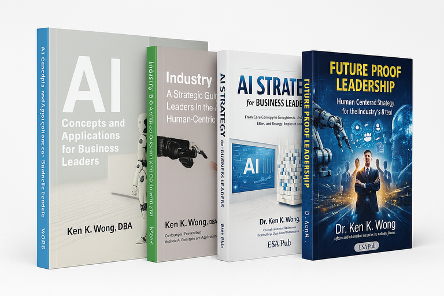
In the first half of 2025, I was moving fast. In addition to my teaching responsibilities at Seneca Polytechnic, I was integrating AI into an EdTech platform, keynoting a Globe and Mail event on AI strategy for business leaders in Toronto, and completing two books — one on Industry 5.0 and one on AI Strategies for business leaders — both centered on a belief I’ve held for years: that the most meaningful applications of technology are the ones built around human dignity.
And then my body stopped me.

A Hospital, a Quiet Ward, and a Lesson I Wasn’t Expecting
A hernia injury from an old car accident had been manageable for years. Then, one night, the pain became unbearable. I managed the pain as best I could, until my scheduled admission day for the surgery at Shouldice Hernia Hospital arrived. It was my first surgery in my life.

For a few days, there was no phone, no email, no lectures to prepare, no papers to grade. I was, for the first time in a long time, simply present.
And in that stillness, I began to notice the people around me.
Many of my fellow patients were elders — men in their 70s and 80s, in hospital gowns, waiting. Waiting before surgery. Waiting through recovery. Waiting, in some cases, just to feel less alone.
They weren’t scrolling their phones. Many couldn’t see the screens clearly. They didn’t want to call their children and worry them — so they kept their fears quiet and put on a brave face when family came to visit. Some wanted to talk at two in the morning, when the ward was dark and their thoughts were loudest.
I watched them and I thought: these people are not waiting for medical advice. They are waiting for someone to sit with them. To listen. To simply be there.
Quietly, in a hospital bed, I cried thinking about how many elders across this country are sitting in that same silence right now, not in hospital wards, but in their living rooms.
My Mother, and the Television She Wasn’t Watching
I thought of my mother.
My father passed away three years ago at 86. My mother is now 84 and lives alone — by her own choice, because she does not want to be a burden to anyone. I know her world well: I came to Canada from Hong Kong in 1992, and my parents never spoke fluent English. To this day, my mother is most herself in Cantonese.
My sister and I visit her almost daily. But one detail stayed with me: my mother leaves the television on all day. Not to watch it. Just to fill the silence. Just to feel like someone is there.
If you have aging parents, you may know exactly what I mean.
Time is passing. And we all want our parents to live their final years with dignity, with presence, and with the feeling that they matter.
My surgery in August 2025 gave me time to reflect on aging, independence, and loneliness. The idea stayed with me long after I recovered from surgery. Then, during the two-week break between my winter and summer semesters in April 2026, I devoted five intense days to building the first prototype of what would become Presentria AI Companion for Elders.
I built it because I wanted my mother to use it.
When I saw her talking to it — and benefiting from it — something shifted for me. This was no longer just a product concept. It was something I needed to see exist in the world.
The Problem Nobody Wants to Say Out Loud
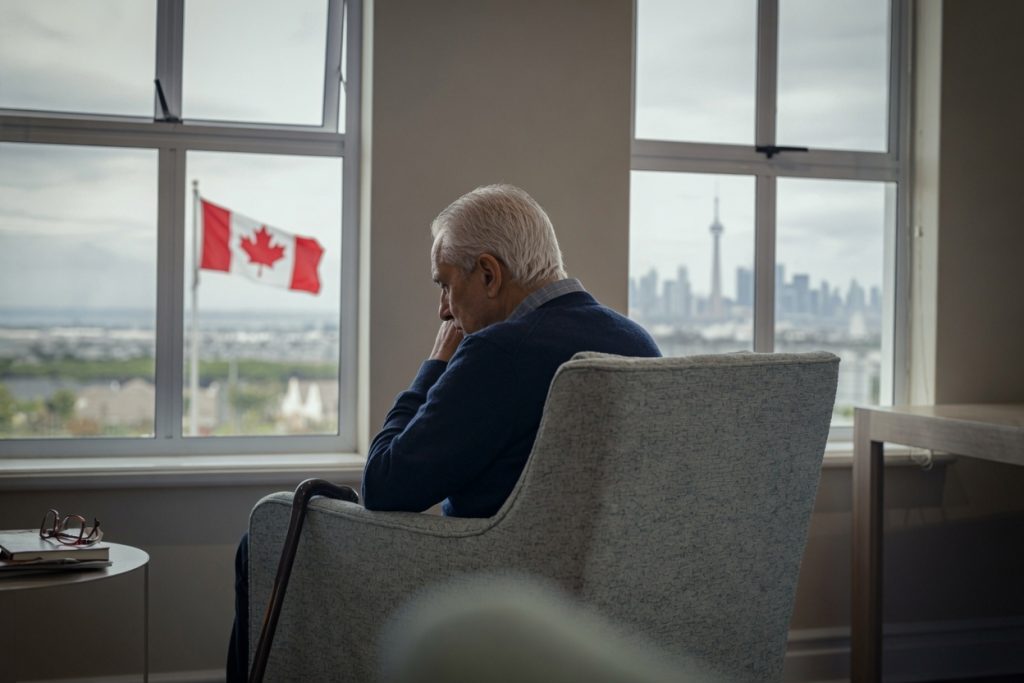
Canada is aging. By 2036, nearly one in four Canadians will be 65 or older. Hundreds of thousands of them are immigrants who may not speak English or French fluently. Thousands more belong to Indigenous communities where elder support and language accessibility gaps are profound.
And almost none of our current technology was designed for them.
Apps assume good vision and digital literacy. Hotlines assume English fluency. Human counsellors are expensive, scarce, and unavailable at 3 a.m. Robots and smart devices create cost and adoption barriers that most families cannot overcome.
What if the answer was simpler?
What if an elder could just pick up the phone — the same phone they’ve used their whole life — and talk to someone who speaks their language, remembers their stories, and checks in on them every morning?
That is what Presentria is.
Why I’m Building This Now
I have spent more than two decades in education. I have taught thousands of students. I have written books on strategy, on AI, on the future of industry.
This is probably my last major project before I retire.
And I want to be honest about something: I did not start this to make money. I started it because I believe that how a society treats its elders is a measure of its character — and I think we can do better.
If this project succeeds commercially, I will be glad. But if it ultimately doesn’t commercialise and instead simply makes more people stop and think about the elders in their lives — their parents, their grandparents, the quiet neighbour down the street — then I will consider it a success.
I sometimes joke that I’m building something I hope people never need to use too often — the way we hope the airbag in our car never deploys, but we are deeply grateful it is there. The best outcome is that elders have families, friends, and communities who give them time. But for the moments when that’s not possible, I want something to be there.

A Vision Bigger Than a Product
What excites me most is not the technology. It’s the possibility.
Not just English. Not just mainstream users.
I want Presentria to eventually serve Indigenous communities, where elder support and language preservation intersect in ways that are deeply important to Canada’s national identity. The voice infrastructure for many Indigenous languages is still evolving, but solutions designed with inclusion at their foundation — not added as an afterthought — are what this country needs.
I am an educator at heart. When I teach, I don’t just transfer information — I try to shift how people see the world. This project is, in many ways, an extension of that. By talking about it, building it, presenting it at schools, having conversations with telecoms and government and community sponsors, I hope to move more people to think seriously about aging — and to act.
When a baby is about to be born, we pour everything into preparing for them. We give toddlers the best food, education, and care we can. But what about the people who spent decades raising families, building communities, and contributing to society?
They may not speak up for themselves. But they have real needs — not just physical ones, but emotional and human ones.
It’s time to pay attention.
Thank You for Reading This
I didn’t write this to impress you. I wrote it because I think anyone considering supporting this project deserves to understand not just what it does — but why it exists, and who built it, and what kept them going through the hard parts.
The hard parts included a lot of tears. They still do, sometimes, when I think about how many people are sitting alone tonight, with a television on in the background.
I want to change that. And I’d love for you to be part of how we do it.
— Ken